
Guide
K/D, ADR, KAST and rating on FACEIT: what they mean
What each common CS2 stat measures, how it is calculated, and what it does not tell you.
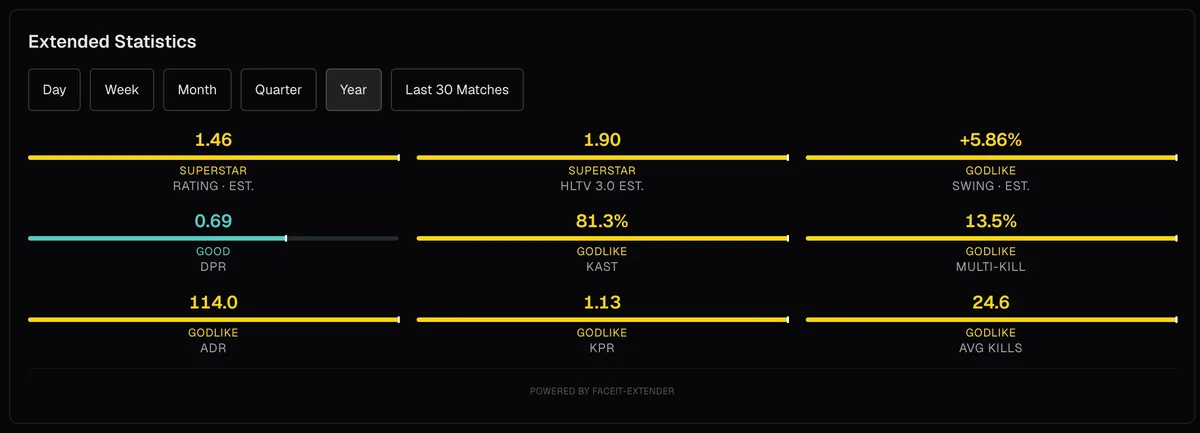
K/D, KPR and DPR
FACEIT Extender shows K/D, ADR, KPR, DPR, KAST, headshot rate, Round Swing and rating estimates on FACEIT; this guide gives plain definitions and says which tell you the most.
K/D is kills divided by deaths. A K/D of 1.0 means you kill as often as you die. It is the best-known stat and also one of the easiest to misread: a player who saves weapons in lost rounds, or who only takes safe fights, can have a high K/D without winning many rounds.
KPR (kills per round) and DPR (deaths per round) split K/D into its two halves. A KPR of 0.8 means four kills every five rounds. Looking at the two separately tells you whether a player wins fights or simply stays alive.
ADR: average damage per round
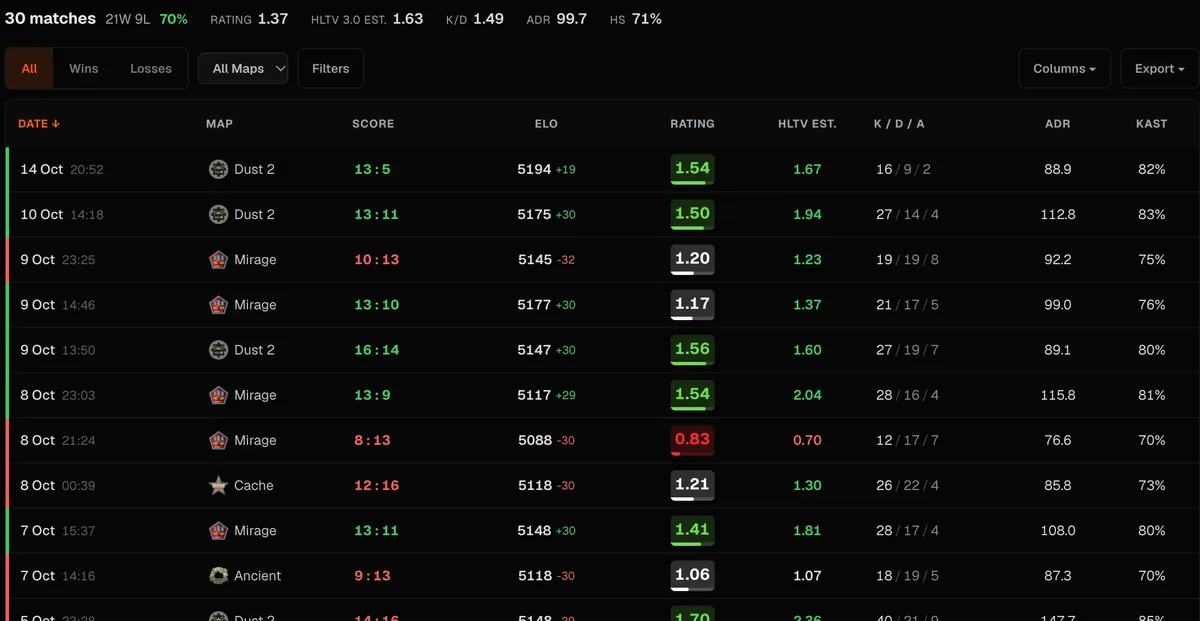
ADR is total damage dealt divided by rounds played. Damage that does not finish a kill still counts, so ADR rewards players who weaken opponents for their teammates. It is often a steadier measure of impact than K/D because it is less affected by who got the last hit.
As a rough guide, around 70 to 80 is solid in most lobbies, and consistently above 90 stands out. Compare with the lobby rather than with a fixed number: what counts as good depends on the level.
KAST and headshot rate
KAST is the percentage of rounds in which a player got a kill, an assist, survived, or was traded (killed and avenged quickly by a teammate). It measures how often a player contributed something, which suits support players whose value does not show in kills. Where FACEIT does not provide every input, the extension shows KAST as an estimate.
Headshot rate (HS%) is the share of kills that were headshots. It says something about aim style and weapon choice, but on its own it is not a skill measure: rifle players and AWP players have very different rates.
Rating, Round Swing and RWS
Ratings combine several stats into one number. The extension shows FACEIT’s own rating where available and an estimate of the HLTV 3.0 rating, labelled as an estimate because it is calculated from FACEIT data rather than by HLTV. Around 1.00 is average; higher is better.
Round Swing estimates how much a player changed their team’s chance of winning each round. RWS (round win shares) splits the credit for won rounds between the players who contributed. Both try to answer whether a player’s numbers actually helped win rounds.
Which stats to trust most
| Stat | Best for | Watch out for |
|---|---|---|
| K/D | A quick first look | Saving and passive play inflate it |
| ADR | Overall impact | Low on support roles that use utility |
| KAST | Consistency | Easy to keep high by playing safe |
| Rating | One-number summary | An estimate; small samples swing it |
Read them together and over enough matches. All of them appear on player cards and in the extended match history after you install the extension.
For the full list of numbers on a card, see FACEIT stats explained.
Related guides
FACEIT Extender is free for Chrome and Firefox: download it or read what it is and does.
Comments
Comments load in your browser.